
Last Call for Low-Rate Assumable Loans
Closing Time: You Don’t Have to Go Home But Low Rates Can’t Stay Here
By Greg Fischer
The basics
An assumable mortgage is a home loan that a buyer can take over from the seller, keeping the original interest rate, balance, and payoff date. FHA and VA loans are assumable. If a seller is paying 3% on a loan they took out in 2021, a qualified buyer can take over that loan instead of borrowing at today's market rate. A new buyer could save hundreds of dollars in principal and interest every month, and thousands of dollars over the life of the loan.
In an assumption, a new buyer and their agent work with the servicer of the seller's loan, rather than applying for a new loan with a different lender. New buyers complete an application and undergo formal underwriting with the existing servicer who looks at credit history, assets, income, employment, and debt to income (DTI) requirements to confirm whether that new buyer can cover monthly payments.
Once the servicer approves the buyer, the seller can request a release of liability that takes their name off the loan, and the transfer is recorded with the county. There is no new loan, so there is usually no appraisal. The rate, the remaining term, and the payoff date all carry over untouched.
Most people don't know that you don't have to be a veteran to assume a VA loan, and you don't have to be a first-time buyer to assume an FHA loan, which opens up these loans to a great number of homebuyers. The two programs have different occupancy requirements, however. A buyer assuming a VA loan isn't required to live in the house, so an assumed VA loan can be taken on as a rental, while a buyer assuming an FHA loan has to occupy it.
Loan by loan
Every FHA and VA loan is eligible to be assumed. RetroRate identifies these loans in our national database and ranks them with RetroMatch™, our score for how much a loan could save a buyer. It weighs what a buyer would save, how far the rate sits below today's, the cash it takes to close, and more, so you can make heads or tails of which ones are worth chasing.
| Loan | Can a buyer assume it? | Does the seller's rate carry over? |
|---|---|---|
| FHA | Yes | Yes |
| VA | Yes | Yes |
| Conventional | Almost never | Not applicable |
FHA and VA loan assumptions transfer the original mortgage rate, which is why they're the two loan types that RetroRate covers.
See all loan types, and who can assume oneThe equity gap. The loan balance is not usually the same as the sale price. A seller who has been paying down a loan since 2021 usually (but not always) owes less than the house is worth today, and the buyer has to cover the difference, otherwise known as the "equity gap". This is cash that a new buyer must bring to the table in order to assume a home. The most common reason that an assumption deal falls apart is a buyer not having enough cash on hand to cover this difference, and it's why our savings calculations lean into numbers at the same cash to close.
Assumption timelines. Assumption timelines vary, and the time to close that a servicer quotes is usually worse than what happens. The assumption teams at servicers were built to move a loan between family members rather than to qualify a stranger in an arm's length transaction, so their timeline quotes tend to describe their queue rather than the work involved. We've seen assumptions close on the same timeline as an ordinary sale when everyone involved is organized and the file goes in complete.
Savings. Just because a loan is assumable doesn't mean it's worth assuming. The obvious example would be an assumable loan with a rate higher than today's (it happens!). This is why RetroMatch™ scores the loan itself, so an agent armed with that data knows how much savings a particular loan brings, on a monthly, yearly, and lifetime basis.
Assumption fees, are typically nominal. These fees are capped by the FHA and VA, rather than set by the servicer, they're small next to the equity gap, and they usually come in under what you'd pay on a new origination.
Example equity calculations
A seller who has been paying a loan down for years, and in areas of appreciating home prices, often owes less than the house is now worth. In a loan assumption, the buyer covers the difference between the asking price, and the remaining loan balance. It's like a down payment on a standard new loan origination.
Illustrative. The figures are chosen to divide cleanly and are not a real listing or a typical one.
Say the seller bought the house years ago with a $100,000 FHA loan and has paid $25,000 of the principal down since. The balance is $75,000, and the house is now worth $125,000.
A buyer assuming that loan takes over $75,000 at the seller's old rate. The sale price is $125,000, so the buyer owes the seller the other $50,000. That's the seller's equity, and it's due at closing like any other down payment: in cash, or with a second loan on top of the one being assumed.
This is why the balance matters as much as the rate. A small balance against a high sale price can take more money up front than a conventional loan would, even though the monthly payment is lower once you're in.
The gap at a realistic price, and how buyers cover itFor a buyer, it comes down to whether the rate is worth the cash and the wait.
Assumable loans are functionally invisible to most buyers and agents, and they don't always appear in real estate portal and broker searches. That's because this relies on an agent manually entering assumable loan details for others to see it. In a world where most owners don't know they have an assumable mortgage, most listing agents miss this crucial step. So searching a portal for the word "assumable" finds a fraction of what's really there. In the markets we can measure, fewer than 8% of assumable listings mention it at all.
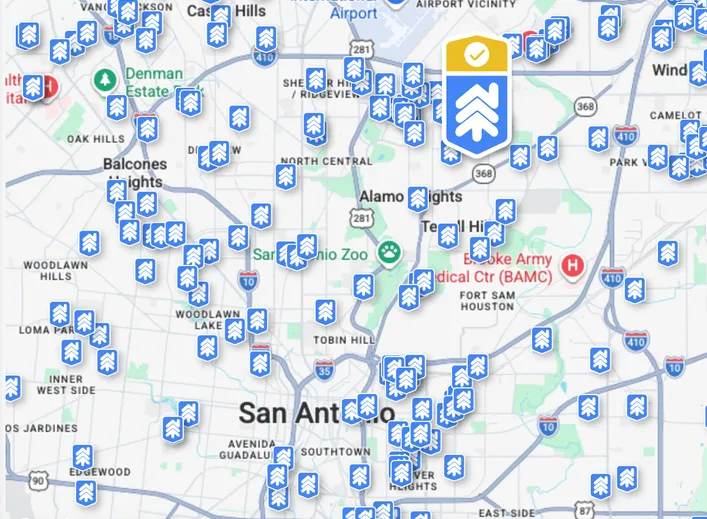
The Assumable Atlas by RetroRate shows you assumable loan coverage in every state, city, and ZIP in the country, with how many assumable loans there are, average rates, and what the payment difference looks like.
The RetroRate VHS Chrome extension marks assumable listings on your favorite real estate websites, and shows you assumable details including monthly payment savings against a new loan at today's rate, at the same cash to close.
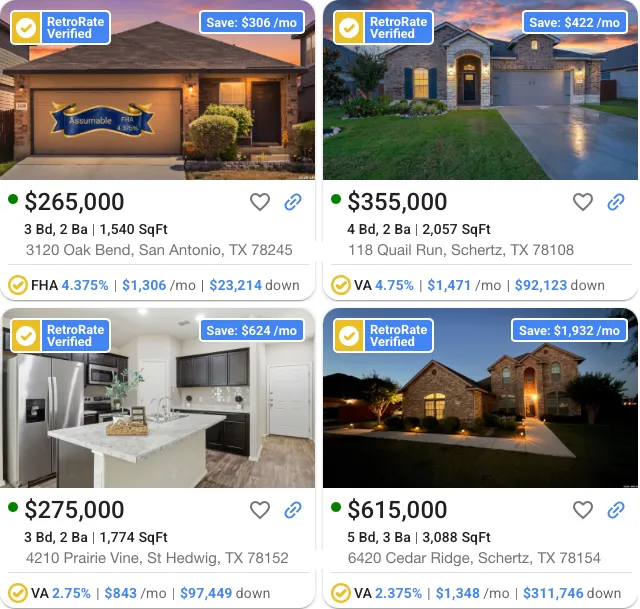
With an FHA or VA loan, that great rate you have is the strongest thing you can put in front of a buyer to drive interest. A RetroRate Verified badge puts real numbers on the listing and shows you did your homework.
An FHA or VA loan that a buyer can take over at the seller’s original rate, instead of getting a new loan at today’s rate. The buyer is qualified by the original servicer, and once the servicer approves them and issues the release, the seller comes off the loan.
A buyer takes over the seller’s existing mortgage, with its terms, interest rate and balance, instead of getting a new one. The buyer’s name replaces the seller’s, the loan is re-recorded at the county, and once the servicer approves the buyer and issues the release, the seller comes off the loan.
FHA and VA loans are generally assumable. Conventional loans usually aren’t, unless the mortgage agreement says so.
To take over an interest rate nobody can get today. Over half of homeowners in the United States have a mortgage under 5%, and a fifth have one under 3%, so assuming the loan can save hundreds of dollars a month and far more over the life of it. (Rate shares: Mortgage News Daily and Compass, 13 July 2026.)
Yes. You take over the existing rate, and it holds for the remaining term of the loan.
Closing Time: You Don’t Have to Go Home But Low Rates Can’t Stay Here
By Greg Fischer

Today’s rates are crushing your vibe. What if you could cut your monthly payment by hundreds and own a home you thought was out of reach?
By Greg Fischer

Buyers are dazzled by sleek finishes long before they hear the one thing that could shift the equation: a better interest rate, taken over from the seller.
By Greg Fischer

See which listings come with one while you're browsing, free.
Occupancy on an assumption is set by each program, not by RetroRate. A buyer taking over an FHA loan has to be approved as a substitute mortgagor and occupy the home as a principal residence or a HUD-approved secondary residence (24 CFR 203.258(b) and 24 CFR 203.512(c)), which is the rule for loans insured on or after 15 December 1989. The VA's assumption statute sets three conditions, that the loan is current, that the buyer is contractually bound, and that the buyer is creditworthy, and imposes no occupancy requirement (38 U.S.C. 3714(a)(1)). A veteran who substitutes their own entitlement is doing something different, and the VA's occupancy rules apply to them.
The 10.6M homes with an assumable loan that aren't for sale, and the roughly 120,000 assumable homes on the market at any one time, are RetroRate's own production data. The share of assumable listings whose remarks mention it, fewer than 8% on average, is RetroRate's own count from the markets where we have listing data.
The example rates, and the $125,000 home in "The equity gap", are illustrative. The numbers are chosen to divide cleanly and are not a real listing or a typical one. What a particular loan saves depends on its rate, balance, and remaining term, and every comparison we publish holds cash to close equal. Estimated payments cover principal and interest only.
RetroRate does not originate loans, determine or extend credit, or engage in lending or mortgage brokering. The original lender or servicer who holds the mortgage handles qualification and approval of new buyers and makes the final decision to extend credit.