In 2015, at the first ever Digital Mortgage Conference, I launched Approved. This was my first startup, a digital mortgage point of sale before “mortgage point of sales” even had a name. Ten years later, and I’m now honored to deliver the Digital Mortgage keynote. Here’s a video of the talk if you want to watch it double speed, but I also wrote up my thoughts for those who still love the written word.
…Just make sure to read it with an “Andy Taylor” voice for full effect.
A Brief History of Rates
First a note about ZIRP
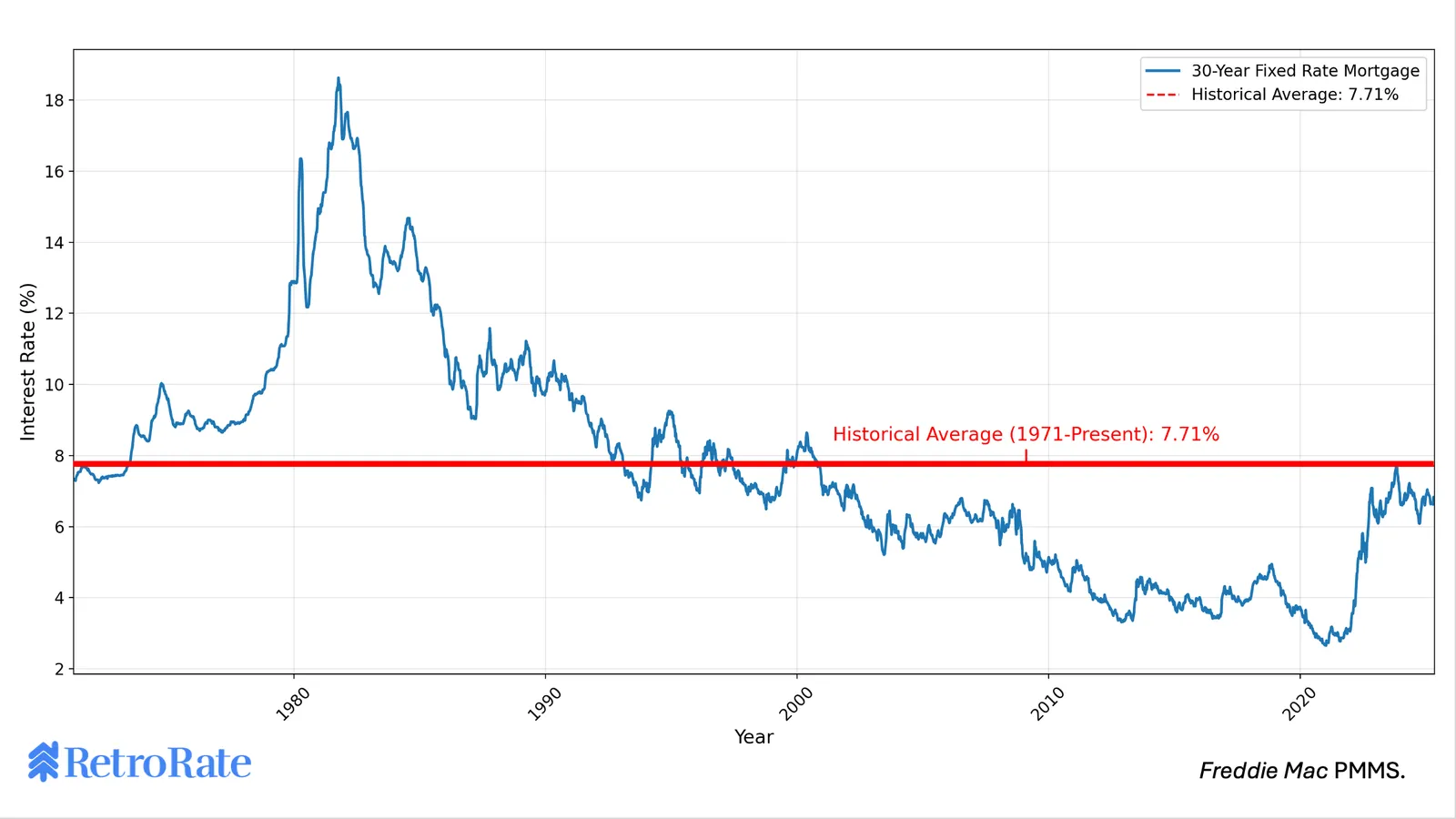
The zero-interest rate world of ZIRP that powered the refi boom was a strange blip in the history of mortgage rates. Literally everyone who could buy or refinance at such incredibly low rates did. This is especially true between mid 2020 and the beginning of 2022. The party was about to end, everyone knew it was going to end, and we all wanted to get our last call in before the lights were turned on and the cops were called.
Today, we have the highest rates in a generation, and the average 30yr fixed interest rate currently sits at ~6.25 — 7%. So what did that do to the market?
• Buyers have lost ~$150k in purchase power on the cost of an average home
• Sellers are locked into monthly payments $1,500/mo lower than if they bought their same house today
• And Agents and other real estate professionals are staring down the barrel of one of the worst transaction years in the past 40 years.
The wrong mindset
Many in the mortgage industry have this mindset that, “business will improve when the Fed cuts rates”. There’s a myth that Jerome Powell is the gatekeeper holding us all back.
But really, truly: Stop waiting for the fed.
Being passive has done nothing to help buyers or sellers the past few years, and Jerome Powell has less of an effect on rates than you think. The last two times the interbank lending rate was lowered (including just last week, 9/17), mortgage rates went UP.
Predicting rates
At the digital mortgage conference we head from Joel Kan, the Deputy Chief Economist of the MBA, who says that we’re only going to see 6.5% at the end of next year. Even Fannie and Freddie have rates pegged in the same ballpark.

So while nobody has a crystal ball, there’s something, right now, that can rewind rates to 4%, 3% or even 2.5%, and that’s the assumable loan. It’s the Retro Tech we need, right now.
Because of the REALLY low rates between 2020 and 2022, we have a massive concentration of homeowners sitting on low rates:
~75% have rates below 5%
~55% have rates below 4%
And nearly 20% still have a rate below 3%… Ah, the good old days.
The assumable loan is the key to unlocking those rates. Not waiting for the fed.
What is this thing anyway?
Now before we go too deep, Let’s spend a moment defining the assumable loan, because if you’re like me, you maybe hadn’t even heard of them prior to 2022.

An “Assumption” is a way for a new buyer to take over a seller’s loan, their rate, their terms, and wherever they are in the amortization cycle. The new buyer is qualified just like any other loan, usually like they were doing a cash flow analysis for underwriting. The Seller is given a release of liability, and the new buyer re-records at the county.
This is not some new financial instrument, or a newfangled startup invention. These are, and have been for a while now, a part of government backed loans.
Fun fact: VA loans don’t have to be assumed by veterans, and non first-time homebuyers can assume an FHA loan as well!
Mucho loans
It’s worth noting that there are a lot of these assumable loans hanging out. No seriously, there are a lot of them. 22–25% of the homes with a mortgage on the market, have an assumable loan.
Take a look at this side-by-side I did in Dallas-Fort Worth.
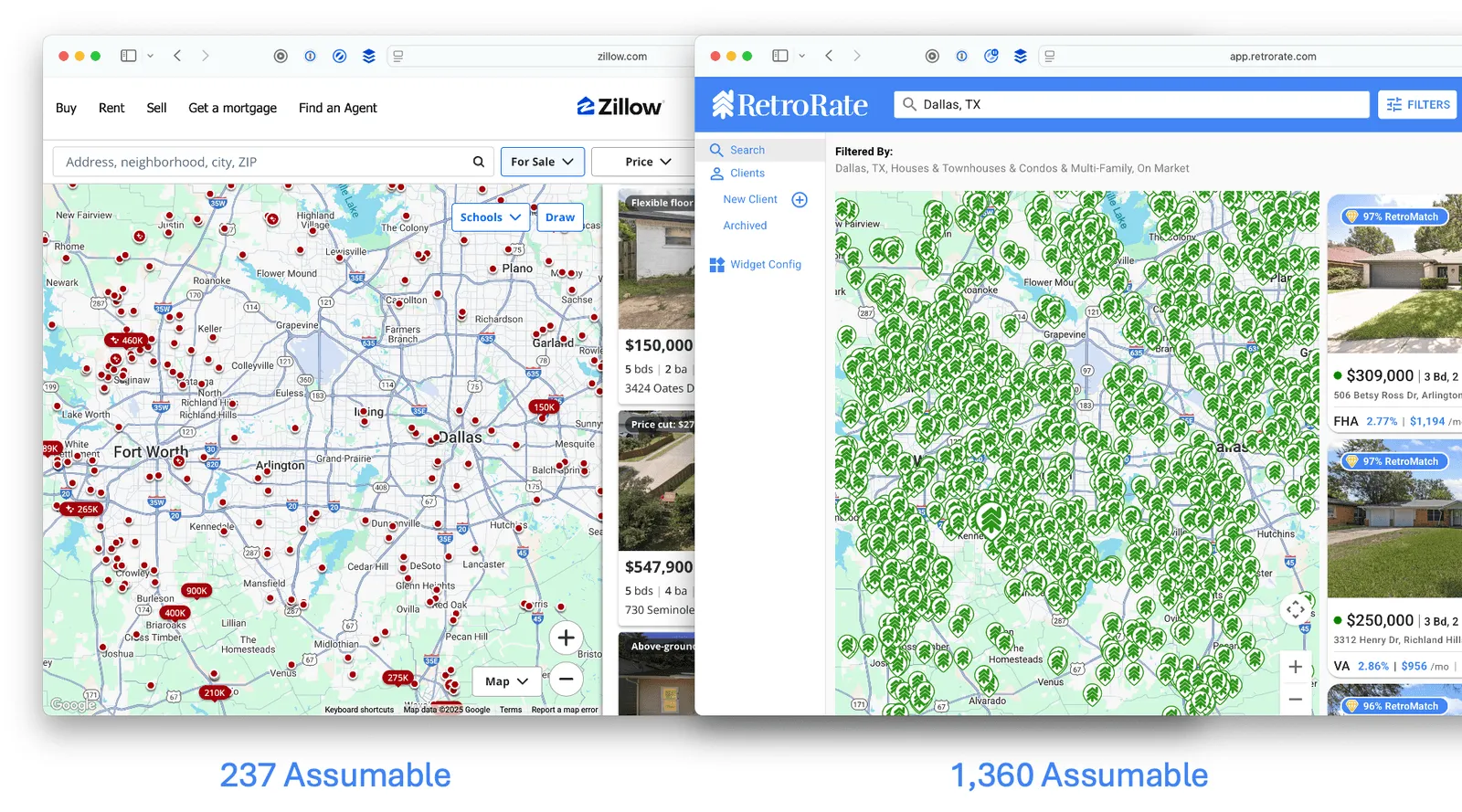
237 homes marked as assumable on Zillow | 1,360 actual assumable listings in real life, a 6x difference!
There are killer deals out there, but you just need to know where to look. Incidentally, check out our browser extension, RetroRate VHS if you want to see detailed assumable loan data on all your favorite real estate sites.
Dispelling the vicious rumors

- They’re too Rare: As I showed, we’re talking 22–25% of the homes with mortgages on the market have an assumable loan.
- Too Hard to Transfer: I agree that the time it takes can be a real pain, but we’re working to improve that. I suggest finding an agent or a service like ours that know how handle assumptions, and it can make this as painless as any other mortgage loan type. If you have a qualified borrower who could have gotten a new loan, you’re halfway there already.
- Not worth the Hassle: On a typical $400,000 loan, each 1% saved in rate equals about a $250/mo in savings on P&I, or $150k in additional buyer purchase power. Homes that market their assumable loans net 5% more than their comparables on average. So if this is the difference between a buyer even being able to afford the home, or a seller netting the downpayment for their next home, it’s absolutely worth it.
Say What?
In a way, assumable loans are like a long forgotten language that nobody speaks anymore:
- Listing agents don’t think to ask about them.
- Sellers don’t know if they have one, even if they were asked.
- Buyers would be furious with you if you didn’t tell them the home they’re interested in has one….
And yet, most listing agents spend the majority of their listing remarks talking about stainless steel appliances and stone countertops.
The Servicer Assumable Loan Report Card
So how has the real estate industry done responding to assumable loans over the past few years when consumers needed them the most? It’s time to grade all the players.

Servicing infrastructure around assumable loans was built to handle things like letting a family member take over a loan. They’re just not set up to handle arms-length, third-party transfers. Not even close. I’ve heard rumors that some of the biggest servicers in the country have 3–5 people total in their assumptions department.
While I understand that a 6.5% loan in a portfolio probably looks better than a 3.5%, your best customer is the one you already have. I should know, because I built and ran the rate table business at Credit Karma for four years. You do realize how expensive it is to acquire new customers, right?
The long road
Many servicers are warning their customers that assumptions are taking as long as 120 days, even though it’s federally mandated to take no more than 45 to make a credit decision. This makes no sense.
- Servicers know the LTV.
- No appraisal is needed.
- Servicers could desktop underwrite and qualify a new borrower super fast if they wanted to.
An assumption should be easier than a net-new loan origination. There is literally no excuse.
Servicers’ Grade: F
The Broker / Agent Assumable Loan Report Card
Despite friction with the servicer, there’s a lot you can do as an agent to leverage assumable loans for you and your clients.

Buyer agents
Be the superhero in this story. Get your buyer more home for the money, or the same home for less money. By leveraging assumable loans, you can send your clients more search results than they can find on their own through Redfin, Zillow, or Realtor.
We built RetroRate agent-first because if there’s one thing I learned at Redfin and Credit Karma, it’s that most consumers don’t understand mortgages, much less assumable mortgages. So guide them through the process, and show them inventory they didn’t even think they could afford.
Listing agents
You should know and ask every time you list a home if it has an assumable loan if you want a line of a hundred people out of your open houses. This is the way you get eyeballs on your listings. The way you standout with picky buyers, whether or not they end up assuming.
If you’re looking for business, dive into homes with assumable loans that aren’t on the market as a prospecting tool. Compare this with your book of business from before 2022, and I guarantee you’re sitting on a gold mine of leads and don’t even know it.
Brokers
If you’re looking for a way to help juice your agents’ transaction volume, to give your team a leg up over the competition:
- Host a Webinar with your team on the benefits of assumable loans at a time of record unaffordability.
- Provide the tools that let your agents find and transact on assumable loans so they’re not left guessing.
- Help dispel the rumors around why assumable don’t make sense.
Brokers & Agents Grade: B-
The Government Report Card

Right now, if a non-veteran assumes the loan of a veteran, that veteran’s entitlement is locked with the home until the original loan is fully paid off. The entitlement is the money that our government provides to veterans to use as a downpayment on their home, often resulting in a near 0% down.
Not being able to use that on the next purchase is a major disincentive for most veterans to allow a non-veteran to take over their loan, especially given how few VA to VA transactions take place since VA buyers only represent 10% of the buying public.
There are some major policy changes that could make assumable loans more widespread. For example, easing entitlement re-use rules would allow sellers to accept any qualified buyer’s offer while retaining VA benefits for later. This would fuel future buys, boost VA funding fees, and promote homeownership. Dive into our thinking from a previous post.
Government / Regulators Grade: C
Everything Old is New Again

Just as vinyl and film cameras came back because they offered something timeless, assumable loans can make homeownership attainable again.
Whenever I attend a conference like the Digital Mortgage Conference, and rub shoulders with the movers and shakers of the industry, I’m reminded that we don’t have to wait for the fed if we just get a little creative and push the boundaries of what we think of as “normal”.
I’m hoping that RetroRate can earn an A+ with our work to get more people into homes. Let me know what you think.

By Andy Taylor
CEO and Co-founder
Cur: Founder/CEO @RetroRate; Prev: VP & GM @CreditKarma, Founder/CEO @Approved (acquired), @SocialCapital, @Redfin, Apple, EA.
Andy Taylor on LinkedIn