
Policy work has a reputation. It moves slowly, it happens behind closed doors, and good ideas tend to die in committee long before they reach a user. So when we stood up at the Real Estate Standards Organization (RESO) 2026 Spring Conference in San Antonio and said we wanted to pass a standard faster than any standard had ever been passed, we meant it.
A few weeks later, the proposal is submitted and moving through RESO. So here’s where we are, how we got here, and what we’re actually trying to fix.
The Asset Hiding Under 1 in 10 Homes
Roughly 10% of active residential listings carry an assumable loan. That’s an FHA or VA mortgage a buyer can take over from the seller, with the same rate and terms, while the seller walks away with a release of liability. In a market where rates have regularly approached 7%, a 2% or 3% loan attached to a home can be worth hundreds, even thousands, of dollars a month in savings to a buyer. It is a material fact.
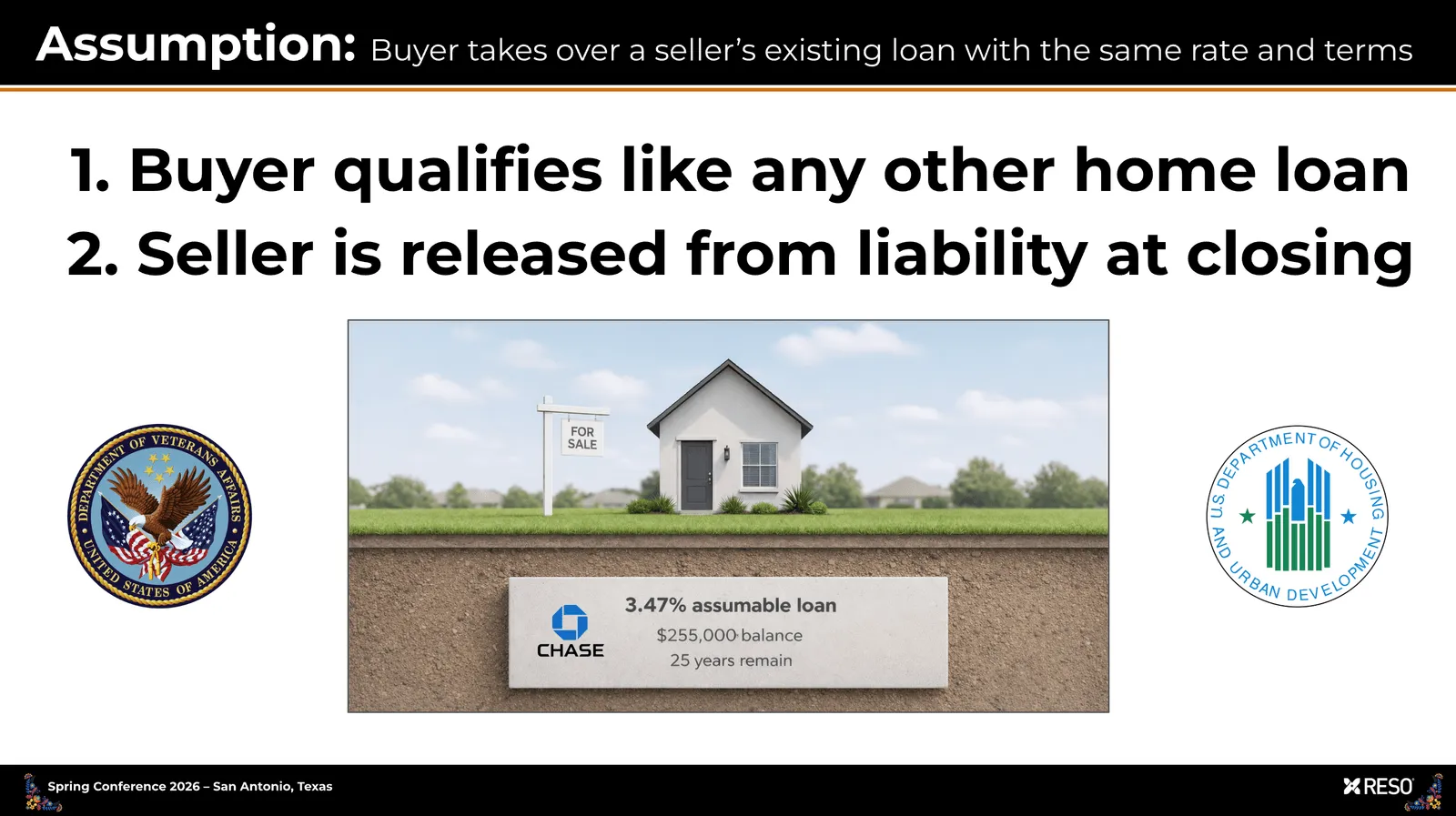
And almost none of it is visible. Today, “assumable” mostly lives buried as an option inside a multi-select field when an agent enters it into the MLS. It’s optional and rarely filled out, or it sits in the free text of public remarks. Neither is searchable. Neither is reliable. Neither carries any actual loan detail. No rate, no balance, no maturity date. The single biggest financial advantage a home might offer goes unindexed.
So consumers do what they do. They research assumable loan strategies on Reddit or in AI chat windows, instead of getting it from the agent or loan officer they’ve hired to represent them. That’s backwards. Professionals should be the source of truth for this, but right now they can’t be.
San Antonio: We Made the Case
At the Spring Conference, we put the problem in front of the people who can fix it. The core argument is simple, and the data backs it: making the signal findable is what closes more assumptions. When a listing carries zero assumable signals, it closes as an assumption less than 1% of the time. When it carries all three signals available today (in the terms and in public or private remarks fields), that jumps to roughly 25%. Making the information visible produces a staggering lift in savings outcomes.
We also showed what scale looks like. Improve detectability across the industry by 10x, and you could see roughly 100,000 additional assumptions close. That’s on the order of a billion dollars a year kept in the pockets of buyers in local communities should it be realized. RetroRate didn’t invent that number. Better data unlocks it for the whole industry.
You can watch the full 15-minute talk here: https://youtu.be/DHjTjPToSGQ
The Proposal Is In
We kept our word. We deliberately built the pitch to be the easy kind of “yes.” It’s additive. It doesn’t change or deprecate a single existing field. What it adds is a small, structured group of fields that does what remarks and a lone checkbox never could: capture the actual characteristics of an assumable loan in a way that’s consistent, searchable, and verifiable across every MLS and data system at once. Structured data, so the assumable signal can finally be filtered, indexed, computed, and trusted.
The case for why a standard is already in the aggregate data. Organizations have built their own local assumable fields, all slightly different from one another. Demand is obvious. A shared standard is what’s missing.
It’s Moving
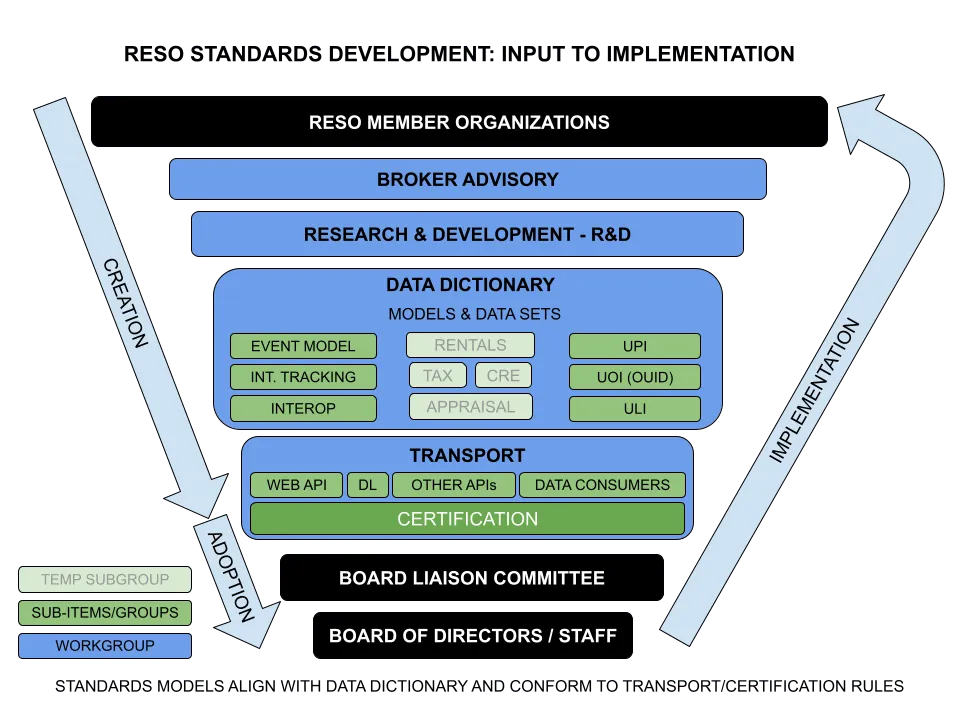
Here’s the part that surprised even us. The proposal is already advancing through RESO’s review process. It’s drawing real discussion, on a timeline that’s anything but the slow grind standards work is known for. We’re at the table speaking to it and taking feedback. We’re not doing it alone, either. BeachesMLS and LERA MLS were early supporters, and interest from other MLSs, brokers, and vendors has been building since the conference.
Speed matters, because the assumable opportunity keeps moving. The pool shrinks as homes sell. But it also grows: mortgage rates have been climbing again, and every uptick pulls another tier of older loans back into assumable territory at rates that weren’t worth a second look a year ago.
The target keeps shifting. Every cycle without structured fields is inventory that closed invisibly, and savings that never reached someone who was entitled to them. We’re not racing a competitor. We’re racing the market.
Help Us Shape It
The proposal is a draft. There’s room to get it right before a version one is adopted, and we’d rather build it in the open with the people who’ll use it.
If your organization already captures assumable data in local fields, wants to implement a shared standard, or just thinks this is a good idea worth doing — come find the proposal in RESO forums or reach out to us.
We said we’d set a standard. Help us set a good one. Fast!
The session is on RESO’s channel: Assumable Loan Standards, A Key to Affordability (14 min). RESO wrote up the conference in its Spring 2026 recap.

By Greg Fischer
Head of Growth
20yrs of startup grit, enterprise tech, and real estate brokerage. Navy Veteran.
Greg Fischer on LinkedIn